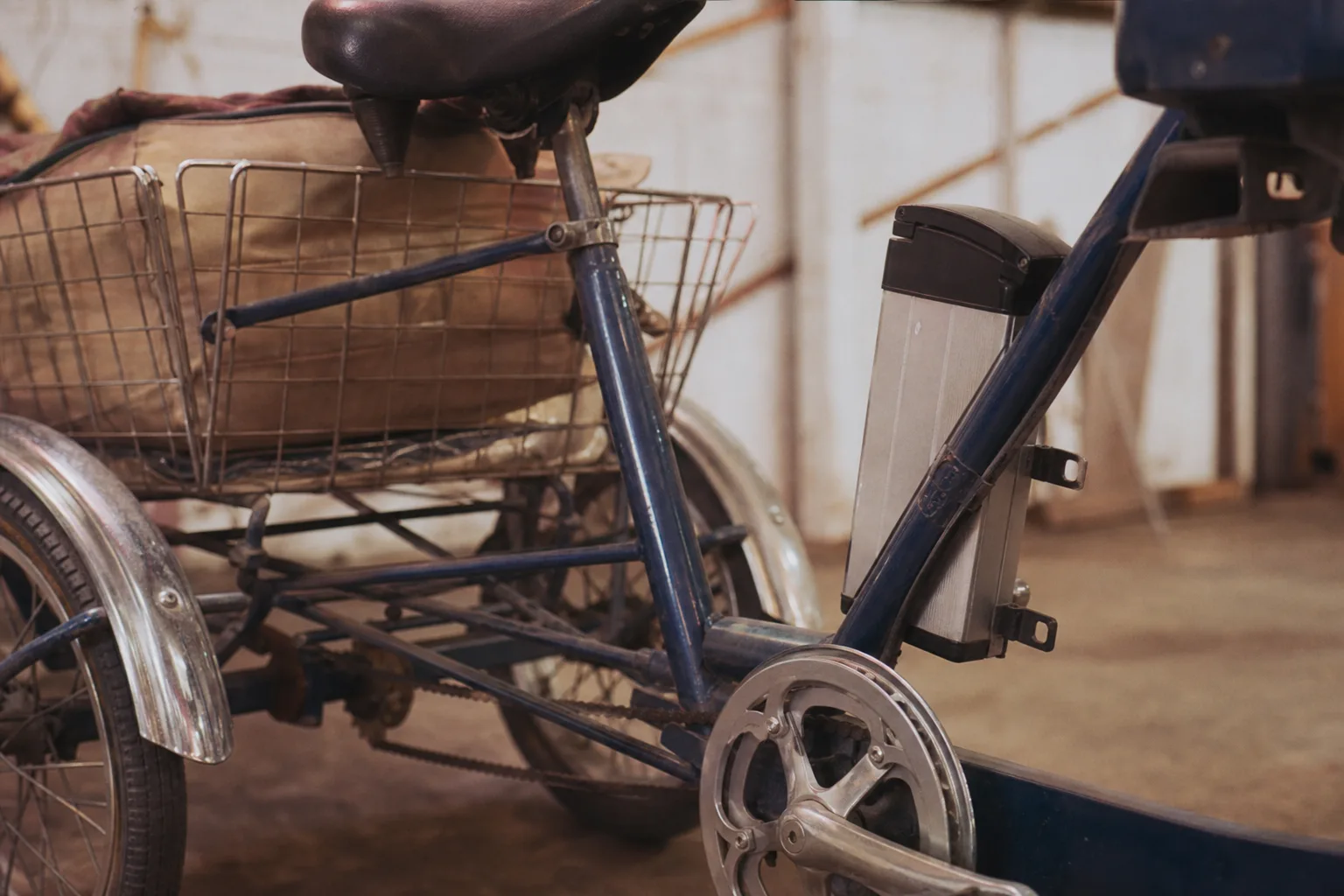
The hill in question runs about three blocks, rising from a supermarket parking lot to a residential street, and a rider on an unpowered delta trike carrying two full paper sacks in the rear basket will get partway up it and then face a decision. On a two-wheeled bike the answer is automatic: stand on the pedals, shift weight forward, grind the last stretch out of the saddle. On a trike that option does not exist. The frame does not lean, the seat holds the rider in place, and every watt has to come from seated legs turning a crank at whatever gear the drivetrain offers.
That single constraint explains most of what separates a good electric trike from a poorly matched one, and it is worth staying with the hill rather than moving straight to specifications. A loaded trike weighing well over a hundred pounds all in, on a grade of five or six percent, asks for sustained power in the range a fit adult can hold for perhaps a minute, not the burst a standing rider produces for ten seconds. Low gearing solves part of it. A motor solves the rest. The question is which kind, and how it decides when to help.
Why the sensor matters more than the wattage
Two systems can both be labeled 750 watts and behave nothing alike. A cadence-sensing motor watches whether the cranks are turning and applies a preset level of assist once they are, which means the power arrives a moment after the rider starts pedaling and leaves a moment after they stop. On a two-wheeler that lag is a quirk. On a trike being walked out of a driveway, or turned tightly in a parking aisle at walking pace, a surge that arrives late and unbidden pushes a machine the rider cannot counter by leaning. A torque sensor measures how hard the rider is actually pressing and multiplies that effort proportionally, so assist rises and falls with the legs.
Anyone shopping carefully should ask the question in exactly those terms, because spec sheets often bury it. Torque sensing, sometimes described as a proportional or force-based system, costs more and appears less often on inexpensive trikes. It is the single feature most worth paying for on a machine with three contact patches, and it matters more at low speed than at any other point in the ride. A 250 or 350 watt motor with a torque sensor and sensible gearing will handle a neighborhood grade with groceries more comfortably than a bigger hub motor governed by a cadence switch.
Hub or mid-drive, and what each hands you later
A rear or front hub motor is self-contained, cheap to build, and largely indifferent to chain wear, which suits a trike used for two-mile errands on gentle terrain. It does not use the gears, so on a steep pitch it works at whatever speed it happens to be turning and heats up if the climb is long. A mid-drive turns the crank instead, so every gear the rider has, the motor has too, and a low gear on a real hill keeps both operating where they are efficient. The trade is drivetrain wear, more chain and cassette replacement, and higher purchase price. Terrain, not preference, should settle it.
The battery questions a careful buyer asks first
Ask what cells the pack uses and who made them, because named cell manufacturers in a properly built pack with a battery management system behave predictably, and generic cells in an unmarked shell do not. Ask whether the pack and charger are certified to a recognized safety standard, and whether the charger shipped with the trike is the one the manufacturer specifies. The Consumer Product Safety Commission oversees hazards in consumer products of this kind, including lithium-ion batteries and their chargers, and its attention to the category is a good reason to buy from a seller who can answer these questions without hesitating.
Then ask the harder one: in five years, when the pack has lost meaningful capacity, can this shop still get another. Proprietary packs that key into a specific frame have a habit of disappearing when the importer changes lines. A dealer who has carried the brand for several seasons, stocks spares, and can name the pack by part number is worth more than a discount.
The unpowered trike remains the right answer for flat routes, short distances and riders who want nothing to charge or replace. Everyone else is buying a sensor, a battery supply chain and a dealer relationship, with a motor attached.